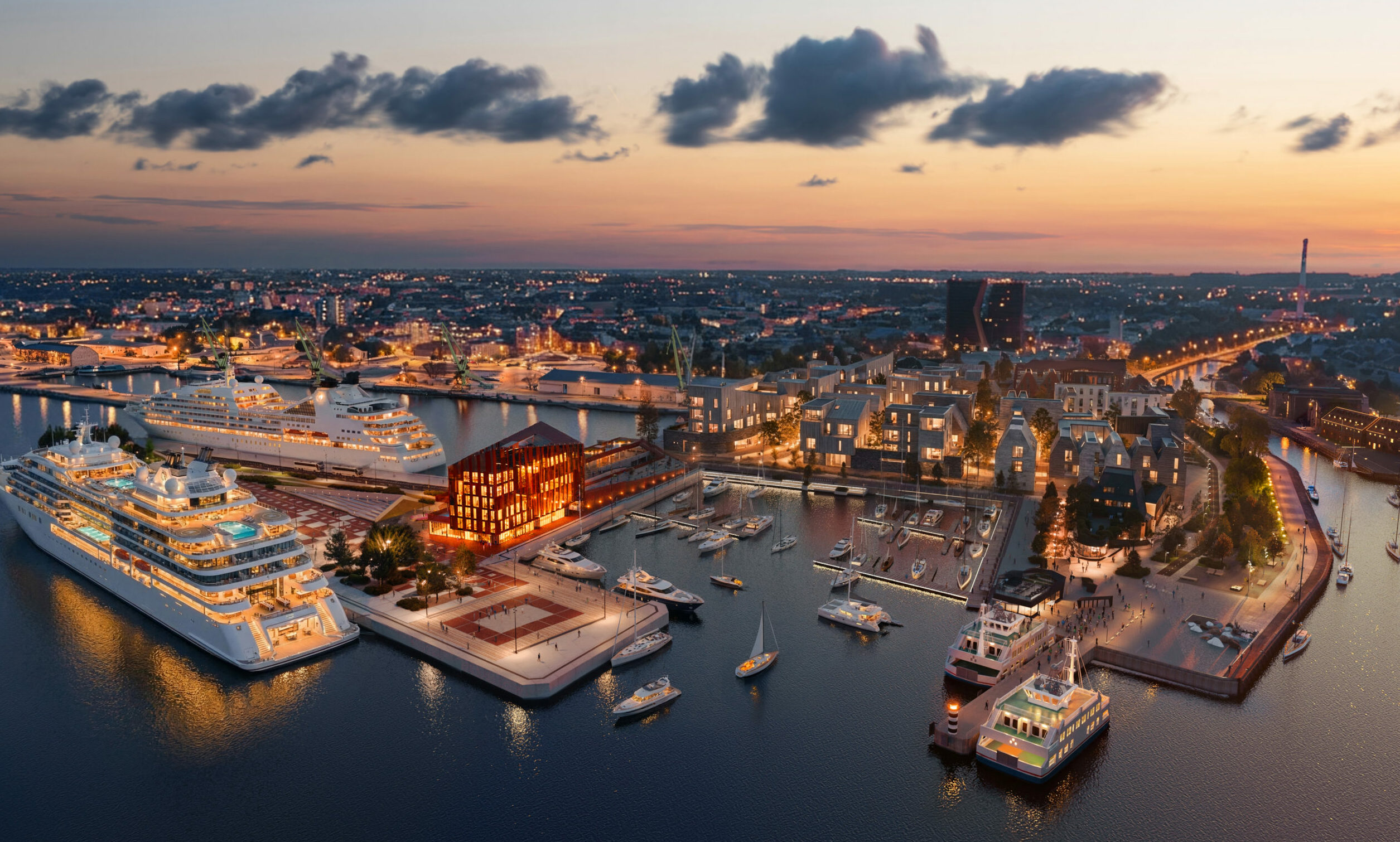

Exceptional place of attraction
Contracts for construction work have been signed. The reconstruction of the quays is in progress
The maritime city is created by the sea and its people. The lack of high-quality waterside spaces for citizens, the deterioration of quaysides, the lack of infrastructure for cruise ships and recreational boats drives to search for effective solutions. The new cruise terminal will address all these problems and add value to the residents and visitors of Klaipėda.
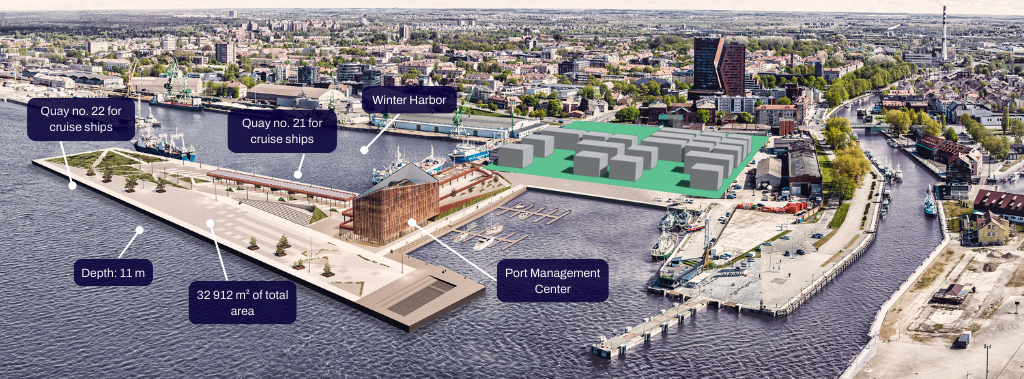
cruise ship TERMINAL PARAMETERS
The new cruise terminal will give the public another access to the Curonian Lagoon. It’s a place to enjoy the ships, watch the sunset or just have a cup of morning coffee while enjoying the views. We are also opening the Winter Harbour. The Winter Harbour, which was inaccessible to the eyes of Klaipėda residents for a long time, is opening up like the palm of your hand – you will be able to observe the port’s activities while staying in the cruise terminal. The project includes a staircase leading to the water, pedestrian and cycling paths, spaces for events, exhibitions and commercial activities.
INFRASTRUCTURE DEVELOPMENT
FOR CRUISING AND ENTERTAINMENT VESSELS
With the long-term growth trend in cruise shipping, both globally and in the Baltic region, the Port of Klaipėda faces the following constraints:
- to receive several cruise ships at the same time;
- to receive cruise ships during city events;
- to accommodate an increasing number of cruise ships;
- unrepresentative environment of the existing terminal.
Adjacent to the new cruise ship terminal, there is an opportunity to develop a marina for recreational vessels. This new city-center pier will help address the current shortage of berthing spaces for leisure boats.
Additionally, land plots will be designated for lease and commercial development, aiming to support activities that create added value for both the port and the city. The construction of the new cruise terminal will bring long-term socio-economic benefits not only to the port authority but also to the city. The growth in cruise ship and tourist arrivals will boost the service sector, including:
- Ship agency and mooring services
- Onshore cruise vessel services
- City infrastructure expansion
- An increase in tourism-related businesses (hospitality, dining, souvenir sales, etc.)
- Higher potential for real estate development
It is projected that the project’s implementation will generate additional annual revenues for local businesses, ranging from €3.3 million in 2029 to €6.1 million in 2031.
PROGRESS
2022-2023
Preparation of the technical design for the new cruise ship terminal

2024
Environmental Impact Assessment (EIA) screening procedures
2024
Construction permit
December, 2024
Construction Contract Signed for the reconstruction of existing quays and construction of new ones
A construction contract has been signed with UAB “Tilsta”. The company is expected to complete all assigned work within three years. The total contract value amounts to €43.9 million, including VAT.
February, 2025
A contract has been signed for the construction of the port administration building
The construction contract was signed with UAB “KRS”. The contract value is €27 million, including VAT.
2027
Development of the new cruise ship terminal

a space for citizens and visitors
The project, based on the winning entry of the architectural competition, was prepared by UAB “Statybos inžinierių konsultantų biuras”. The project’s authors are UAB “Architektūros linija” and MB “Devyni plius architektai,” including Gintaras Čaikauskas (project leader), Andrius Keizikas, Arnas Deltuva, Martynas Lukas, and Miroslaw Szejnycki.


